
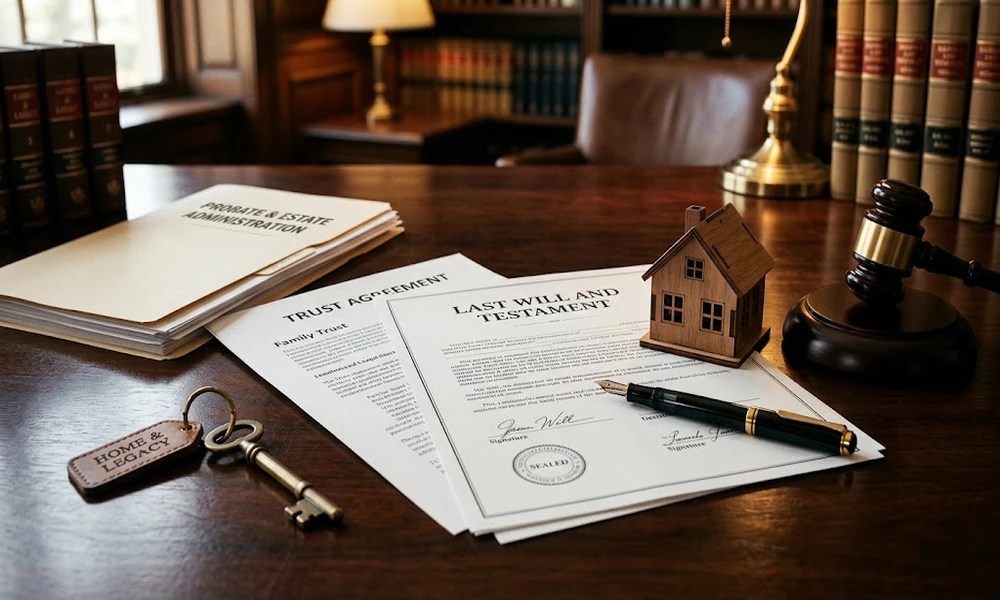
Estate planning involves more than deciding who will inherit your assets. It also includes choosing the legal tools that determine how your property is managed during your lifetime and distributed after your death. Three of the most common terms in estate planning are wills, trusts, and probate. Although they are closely related, each serves a different purpose, and understanding their functional differences can help individuals make informed decisions.
What Is a Will?
A will is a legal document that outlines how a person’s assets should be distributed after death. It can also name a guardian for minor children and designate an executor to carry out the instructions in the document. A will generally does not take effect until the person passes away and typically must go through probate before assets can be distributed.
What Is a Trust?
A trust is a legal arrangement in which a person, known as the grantor, transfers assets to a trustee to manage for the benefit of one or more beneficiaries. Depending on the type of trust, it may take effect during the grantor’s lifetime or after death. Trusts can provide greater control over how and when assets are distributed, making them useful for a variety of estate planning goals.
Understanding Probate
Probate is the court-supervised legal process used to validate a will, settle outstanding debts and taxes, and distribute a deceased person’s assets according to the will or applicable law if no valid will exists. The probate process can vary in length and complexity depending on the size of the estate, the types of assets involved, and whether any disputes arise among beneficiaries.
Key Differences Between Wills and Trusts
While both wills and trusts help transfer assets, they function differently. A will only becomes effective after death and usually passes through probate. A trust, on the other hand, can manage assets during the grantor’s lifetime and may allow certain assets to be transferred outside of probate if they have been properly placed into the trust. Trusts may also offer greater privacy because they generally are not part of the public probate record.
Choosing the Right Estate Planning Tools
The appropriate estate planning strategy depends on an individual’s financial situation, family circumstances, and long-term goals. Some people rely on a will alone, while others use both a will and one or more trusts to create a more comprehensive plan. Consulting a qualified estate planning professional can help ensure that legal documents are properly prepared and aligned with applicable laws.
Final Thoughts
Understanding the differences between wills, trusts, and probate is an important step in preparing for the future. By selecting the right legal tools, individuals can help protect their assets, provide for loved ones, and simplify the administration of their estate according to their wishes.
This article was written by Alla Tenina. Alla is a top Orange County estate planning attorney and the founder of Tenina Law. She has experience in bankruptcies, real estate planning, and complex tax matters. The information provided on this website does not, and is not intended to, constitute legal advice; instead, all information, content, and materials available on this site are for general informational purposes only. Information on this website may not constitute the most up-to-date legal or other information. This website contains links to other third-party websites. Such links are only for the convenience of the reader, user, or browser; the ABA and its members do not recommend or endorse the contents of the third-party sites.